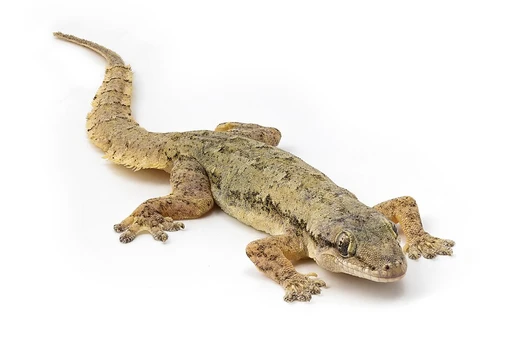
Iguanidae
Family of lizards including iguanas, chuckwallas, and their prehistoric relatives.

Iguanidae is a family of lizards comprising iguanas, chuckwallas, and their prehistoric relatives. The family likely first appeared in the Cenozoic, though two previously identified Cretaceous genera (Pristiguana and Pariguana) are now considered unlikely to belong to this family. The subfamily Iguaninae, which contains all modern genera, likely originated in the earliest Paleocene, about 62 million years ago. Iguanas are diverse in size, appearance, and habitat, typically flourishing in tropical, warm climates across the Americas and Pacific islands.
- First appearance
- Cenozoic
- Origin of Iguaninae
- Earliest Paleocene, about 62 million years ago
- Basal genus divergence
- Late Eocene, about 38 million years ago
- Modern genera formation
- Neogene period
- Primary distribution
- Americas, with one genus (Brachylophus) native to Fiji and Tonga
- Key traits
- Dorsal spines, dewlap, sharp claws, long whip-like tail, stocky build, herbivorous, oviparous, poikilothermic
Lore & Background
The Iguanidae family includes diverse species such as the widespread green iguana, chuckwallas, and extinct relatives. The most basal extant genus, Dipsosaurus, diverged from the rest of Iguaninae during the late Eocene, about 38 million years ago, followed by Brachylophus about 35 million years ago, presumably after its dispersal event to the Pacific. All other modern iguana genera formed in the Neogene period. Iguanas typically possess dorsal spines, a dewlap, sharp claws, a long whip-like tail, and a stocky, squat build. Most are arboreal, though some are terrestrial. They are herbivores, oviparous, and exhibit nest-guarding behavior but little parental care after hatching. Like all extant non-avian reptiles, they are poikilothermic and rely on basking for thermoregulation.
Reader's Guide
Iguanidae holds significance as a family of lizards that includes iconic species like the green iguana and the marine iguana. Their distribution is primarily in the Americas, from the Southwestern United States through Mexico, Central America, and the Caribbean to South America, with the notable exception of the genus Brachylophus found on Fiji and Tonga, thought to result from the longest overwater dispersal event for a vertebrate species. The family's classification has been debated, with various schemes recognizing different subfamilies and families. The 'historical' classification grouped all New World iguanians plus Brachylophus and Madagascar oplurines informally. The family includes both extant and extinct genera, such as the Cretaceous Pristiguana and Pariguana, which are now excluded from the family. Iguanas have spread to Pacific Islands via the exotic pet trade, and some species are endemic to specific regions, like the Galapagos pink iguana and the Grand Cayman blue iguana.
Did You Know?
- The subfamily Iguaninae likely originated about 62 million years ago in the earliest Paleocene.
- The most basal extant genus, Dipsosaurus, diverged from other Iguaninae about 38 million years ago.
- The only non-American iguana species are members of the genus Brachylophus and the extinct Lapitiguana, found on Fiji and formerly Tonga.
- Two Cretaceous genera, Pristiguana and Pariguana, were previously identified as part of Iguanidae but are now considered unlikely to belong to the family.
Deep Roots in Deep Time
The family Iguanidae traces its modern lineage back to the earliest Paleocene, roughly 62 million years ago, when the subfamily Iguaninae — the group that would eventually give rise to every living iguana genus — first branched off. Two genera once attributed to this family, Pristiguana and Pariguana, were originally thought to be Cretaceous representatives, but subsequent analysis has cast serious doubt on their placement within Iguanidae, leaving the Cenozoic as the true starting point. The earliest split among surviving lineages involved Dipsosaurus, the desert iguana, which diverged from its relatives during the late Eocene around 38 million years ago. A few million years later, at approximately 35 million years ago, Brachylophus separated from the main group, a divergence that presumably accompanied its remarkable dispersal across the Pacific. Every other extant iguana genus emerged during the Neogene period, meaning the familiar green iguanas, chuckwallas, and marine iguanas we recognize today are comparatively recent arrivals, their lineages crystallizing over the last tens of millions of years in a steady, layered radiation.
Built for the Tropics
Iguanas and their close relatives display a striking range of body sizes, color patterns, and habitat preferences, yet a shared anatomical toolkit unites them. A row of dorsal spines runs along the back, a fleshy dewlap hangs from the throat, and powerful, sharp claws grip branches or rock. The long, whip-like tail and the overall stocky, squat frame are hallmarks of the group. Most species are arboreal, spending their days high in the canopy, though several lineages have shifted toward a more terrestrial, ground-level lifestyle. Their feeding strategy is predominantly herbivorous, with each species tailoring its diet to whatever leaves, flowers, or fruits are locally abundant. Reproduction follows an oviparous pattern: females lay eggs, tend the nest with a degree of guarding behavior, but offer little to no care once the young hatch. As poikilothermic reptiles, iguanas depend on external heat sources, regularly basking in direct sunlight to regulate their internal temperature and fuel their metabolism.
From Deserts to the Far Pacific
The geographic footprint of Iguanidae is overwhelmingly American. With the single exception of the genus Brachylophus, every modern iguana genus is native to the Western Hemisphere, stretching from the arid deserts of the Southwestern United States, through Mexico and Central America, across the Caribbean islands, and deep into South America all the way to the northern reaches of Argentina. Yet the family's story reaches far beyond its homeland. The green iguana, Iguana iguana, has been carried by the exotic pet trade and illegal releases into ecosystems across the Pacific Islands, Fiji, Japan, and Hawai'i. At the opposite extreme, some species are locked into vanishingly small ranges: the Galápagos pink iguana is confined to particular sites on the Galápagos archipelago, and the Grand Cayman blue iguana survives only within a modest wildlife reserve on a single island. The most extraordinary dispersal belongs to Brachylophus and the now-extinct Lapitiguana, which rafted more than 8,000 kilometers across the open Pacific from the Americas to Fiji and Tonga — the longest overwater journey ever documented for a vertebrate.
A Family in Flux: The Taxonomy Wars
Defining exactly which lizards belong in Iguanidae has been a persistent source of debate among herpetologists. The earliest historical scheme treated the group as a loose assemblage of informal lineages — anoloids, basiliscines, crotaphytines, iguanines, morunasaurs, oplurines, sceloporines, and tropidurines — without granting them formal taxonomic rank.
Frequently Asked Questions
What is Iguanidae?
Iguanidae is a lizard family encompassing iguanas, chuckwallas, and their extinct ancestors. It is one of the most visually distinctive lizard families, recognizable by its stocky builds and ornamental features like spines and throat flaps.
When did Iguanidae first appear?
The family most likely emerged during the Cenozoic era. The subfamily Iguaninae, which contains every living genus, dates to the earliest Paleocene, roughly 62 million years ago.
Where do Iguanidae live?
The family is overwhelmingly a New World group, flourishing in tropical and warm regions across the Americas. The sole Pacific representative is the genus Brachylophus, native to Fiji and Tonga.
What are the defining traits of Iguanidae?
Members are characterized by dorsal spines, a throat flap called a dewlap, sharp claws, a long whip-like tail, and a stocky frame. They feed on vegetation, reproduce by laying eggs, and are poikilothermic, relying on external heat to regulate body temperature.
How did modern Iguanidae lineages diverge?
The earliest split among basal genera occurred in the Late Eocene, approximately 38 million years ago. The genera we recognize today crystallized during the Neogene period.
More in Lizards And Snakes 1-17
Spotted an error? Know more?
This is a living reference — every entry is fact-audited, and reader corrections feed straight into our audit queue. Suggest an edit · See this site's audit record