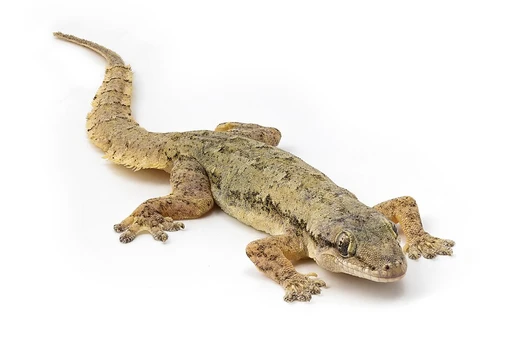
Legless lizard
Lizards that independently lost or reduced limbs for locomotion.

Legless lizard is a common name for several groups of lizards that have independently lost limbs or reduced them to the point of being useless for locomotion. It is also the common name for the family Pygopodidae. These lizards are often distinguishable from snakes by possessing eyelids, external ear openings, lack of broad belly scales, a notched rather than forked tongue, two lungs of roughly equal size, and a very long tail. Limb reduction in squamates is highly associated with body elongation and an increase in vertebral number.
- field
- Herpetology
- known_for
- Independent evolution of limblessness or greatly reduced limbs across multiple lizard families
- key_families
- Pygopodidae, Anguinae, Cordylidae, Dibamidae, Anniellidae, Gymnophthalmidae, Scincidae, Amphisbaenia
Lore & Background
The group Amphisbaenia, commonly known as worm lizards, comprises 201 extant species in six families, most of which are legless with hindlimbs always absent. Every stage of reduction of the shoulder girdle occurs among limbless squamates, but the pelvic girdle is never completely lost; at least the ilium is retained in limbless lizards and most basal snakes.
Reader's Guide
Legless lizards represent a remarkable case of convergent evolution, where multiple lineages within Squamata have independently lost or reduced limbs, often in association with burrowing or dense vegetation. Their study helps clarify the evolutionary transitions between limbed and limbless forms, as the pelvic girdle is never completely lost even when limbs are absent. The distinction from snakes is based on several anatomical features, including eyelids, external ear openings, and tail length. The diversity of limbless lizards spans numerous families and continents, from the Australian pygopodids to the African skinks and the American anniellids. Their existence challenges simplistic definitions of what constitutes a lizard versus a snake and underscores the plasticity of vertebrate body plans. The inclusion of Amphisbaenia, which are often mistaken for worms or snakes, further illustrates the ecological and morphological breadth of limbless squamates.
Did You Know?
- Legless lizards are often distinguishable from snakes by possessing eyelids, external ear openings, and a notched rather than forked tongue.
- The pelvic girdle is never completely lost in limbless lizards; at least the ilium is retained.
- Pygopodids, also called flap-footed lizards, lack forelimbs but have hindlimbs reduced to small digitless flaps.
- The family Dibamidae comprises 23 species of limbless burrowers that are nearly or completely blind.
Distinguishing Legless Lizards from Snakes
Legless lizards are often mistaken for snakes, but several anatomical features reliably separate the two groups. A legless lizard will typically possess functional eyelids, something snakes entirely lack. External ear openings are another giveaway — snakes do not have them. The ventral surface of a legless lizard lacks the broad, overlapping belly scales that snakes use for locomotion. When examining the head, a legless lizard's tongue is notched rather than deeply forked. Internally, the respiratory system differs: legless lizards carry two lungs of roughly comparable size, whereas snakes possess one short lung and one greatly elongated one. Finally, the tail-to-body ratio tells the story — a legless lizard has a distinctly long tail relative to its body, while a snake's body is long and its tail comparatively short. Together, these traits form a practical checklist for field identification, confirming that what appears to be a snake is in fact a limbless or nearly limbless member of the lizard lineage.
Evolutionary Convergence and the Persistence of the Pelvis
The loss of limbs in lizards is not a single evolutionary event but a remarkable case of repeated, independent convergence. Dozens of families across the order Squamata have separately shed or drastically reduced their appendages, each arriving at a snake-like body plan on its own. Yet even in the most extreme cases of limblessness, a critical anatomical constraint holds: the pelvic girdle is never fully eliminated. At minimum, the ilium persists in limbless lizards and in the most basal snakes, whereas the shoulder girdle can be reduced to complete absence. This asymmetry suggests deep developmental or functional reasons for retaining at least part of the hindlimb skeleton. Furthermore, limb reduction in squamates is tightly linked to body elongation, a process marked by an increase in the number of vertebrae. The result is a family of convergent body forms — long, slender, and often burrowing — that evolved in parallel across continents and lineages, yet always left a skeletal echo of the limbs that once were.
A Global Tapestry of Limbless Lineages
Limblessness has evolved across an astonishing range of lizard families scattered on every continent. In Europe, Asia, North America, and North Africa, the subfamily Anguinae within Anguidae includes the well-known slow worms, glass snakes, and the scheltopusik, all entirely legless. In Africa, the family Cordylidae harbors the genus Chamaesaura, whose five species retain only tiny scaly hindlimb protuberances. Australia and New Guinea are home to all 44 species of Pygopodidae, the flap-footed lizards. In Mexico and Southeast Asia, the 23 species of Dibamidae are limbless, nearly blind burrowers. Six legless lizards of the genus Anniella occupy central and southern California plus Baja California. South America hosts the legless genus Ophiodes within the otherwise legged galliwasps, while the large neotropical family Gymnophthalmidae contains the 23 species of Bachia, famous for their figure-eight escape flicks. Finally, the 201 extant worm lizards of Amphisbaenia, spread across six families, are predominantly legless.
Pygopodidae: The Flap-Footed Lizards of Australia
The family Pygopodidae stands out among limbless lizards for a peculiar anatomical compromise. All 44 species lack forelimbs entirely, yet they retain hindlimbs that are reduced to small, digitless flaps — hence the common names flap-footed lizards and scaly-foot. These flaps are clearly non-functional for locomotion, but their persistence distinguishes pygopodids from truly legless groups. The family is spread across seven genera: Aprasia, Delma, Lialis, Ophidiocephalus, Paradelma, Pletholax, and Pygopus. Their range is almost exclusively Australian, with the notable exception of the two Lialis species that also occur in New Guinea, one of which is found only on that island. Phylogenetically, pygopodids are regarded as an advanced evolutionary clade nested within the infraorder Gekkota, the same group that contains six families of geckos. This placement makes them a striking example of how a gecko lineage can converge on a limbless, snake-like body plan while retaining vestigial hindlimb structures and a distinct Australian biogeographic identity.
Frequently Asked Questions
What is a legless lizard?
A legless lizard is a common name for several unrelated groups of lizards that have independently lost their limbs or reduced them to the point where they can no longer be used for movement. The term also specifically refers to the family Pygopodidae.
How can I tell a legless lizard apart from a snake?
Legless lizards have eyelids, visible external ear openings, a notched (rather than forked) tongue, two roughly equal-sized lungs, and a very long tail, none of which snakes possess. They also lack the broad belly scales that snakes rely on for locomotion.
Which lizard families are known for legless species?
Legless forms appear across multiple families including Pygopodidae, Anguinae, Cordylidae, Dibamidae, Anniellidae, Gymnophthalmidae, Scincidae, and the order Amphisbaenia. This widespread pattern shows that limblessness evolved independently many times rather than arising from a single ancestor.
Why did legless lizards lose their limbs?
Limb reduction in these lizards is strongly linked to body elongation and an increase in vertebral number, suggesting the loss of limbs was tied to a shift toward a more worm-like, burrowing, or subterranean lifestyle.
Is a legless lizard the same thing as a snake?
No, legless lizards are true lizards that merely lost or reduced their limbs over evolutionary time, while snakes represent a separate lineage within squamates. They can be reliably distinguished by features like eyelids, ear openings, and their notched tongue.
More in Lizards And Snakes 1-17
Spotted an error? Know more?
This is a living reference — every entry is fact-audited, and reader corrections feed straight into our audit queue. Suggest an edit · See this site's audit record