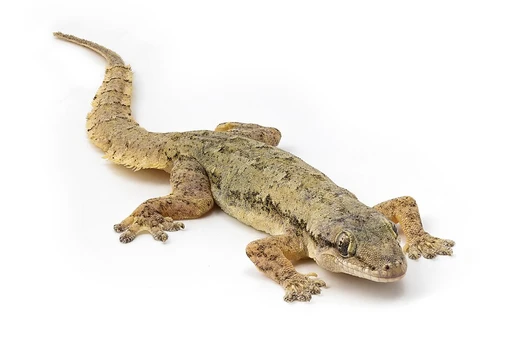
Lizard
Over 7,000 species of squamate reptiles excluding snakes.

Lizard is the common name used for all squamate reptiles that are not snakes (and to a lesser extent amphisbaenians or 'worm lizards'), encompassing over 7,000 species. They have a cosmopolitan distribution, ranging across all continents except Antarctica, as well as most oceanic island chains. Extant lizard species vary in size from the 13.5 mm nano-chameleon and the 14–18 mm Jaragua dwarf gecko to the 3-meter-long Komodo dragon. Snakes descended from lizards, so cladistic classification systems often regard 'lizard' as a paraphyletic group, and some lizards are more closely related to snakes than they are to other lizards.
- Common name
- Lizard
- Taxonomic group
- Squamata (excluding snakes and most amphisbaenians)
- Number of species
- Over 7,000
- Size range
- 13.5 mm to 3 m
- Distribution
- All continents except Antarctica, plus most oceanic island chains
- Diet
- Mainly carnivorous; smaller species eat insects, larger ones prey on tetrapods up to water buffalo size
- Distinctive feature
- Movable quadrate bone (shared with snakes)
Lore & Background
Lizards are often territorial, with males fighting other males and signalling, often with bright colours, to attract mates and intimidate rivals. Most lizards are quadrupedal with a side-to-side swaying gait, though some can run on hindlimbs. Some lineages, known as 'legless lizards,' have secondarily lost their limbs and developed a snake-like elongated body due to convergent evolution. Some lizards, such as the arboreal Draco, are capable of gliding flight using fanned-out gular membranes and costal patagia as wings. Lizards are able to thrive in a wide range of habitats, from wetlands to deserts, from alpine meadows to coastal caves, from arctic tundra to tropical islands. Some small lizards like the common house gecko and pale-flecked garden sunskink adapt to niches within human settlements.
Reader's Guide
Lizards are significant as a highly diverse and widespread group of reptiles, with over 7,000 species occupying nearly every terrestrial habitat except Antarctica. Their evolutionary relationship to snakes makes them a key group for understanding squamate phylogeny; cladistic classification often treats lizards as paraphyletic because snakes descended from them. Lizards exhibit a remarkable range of adaptations, including limb loss, gliding flight, adhesive toe pads using van der Waals forces, venom production (found in Gila monsters, Mexican beaded lizards, and monitor lizards including the Komodo dragon), and antipredator behaviors such as tail autotomy and reflex bleeding. Their venom genes, shared with snakes, suggest a common venomous ancestor some 200 million years ago, forming the clade Toxicofera. Lizards also contribute to medical research, as their venom proteins offer potential for new drugs. Their ability to thrive in human settlements and extreme environments underscores their ecological versatility.
Did You Know?
- Lizards range in size from the 13.5 mm nano-chameleon to the 3-meter-long Komodo dragon.
- Some lizards, such as the arboreal Draco, can glide using fanned-out gular membranes and costal patagia as wings.
- Komodo dragons have iron-reinforced teeth, with high concentrations of iron strengthening the tips and serrated edges.
Cosmopolitan Reach and Extraordinary Size Range
Lizards represent one of the most widespread groups of reptiles on Earth, with more than seven thousand extant species distributed across every continent except Antarctica and across most oceanic island chains. Their ecological tolerance is remarkable: they occupy habitats stretching from arctic tundra and alpine meadows to scorching deserts, coastal caves, tropical islands such as the Galápagos, and even the wetlands and urban settlements of human cities. Species like the common house gecko and the pale-flecked garden sunskink have carved out niches within towns and neighborhoods, becoming fixtures of urban wildlife. The sheer range of body sizes within the group is staggering. At the tiny end sit the nano-chameleon at roughly 13.5 millimeters and the Jaragua dwarf gecko at fourteen to eighteen millimeters, while at the opposite extreme the Komodo dragon stretches to nearly three meters in length. Despite these extremes, the vast majority of lizard species remain fairly small animals, a fact that shapes both their ecological roles and their vulnerability to a wide array of predators.
Movement, Gliding, and the Mechanics of Motion
Most lizards are four-limbed animals that travel with a characteristic side-to-side swaying gait, alternating the movement of their right and left limbs while their bodies bend considerably with each stride. This body bending, however, creates a physiological trade-off known as Carrier's constraint: the same muscular contractions that drive locomotion interfere with breathing, which limits the endurance of these animals during sustained movement. Despite this, several species have evolved to run on their hindlimbs alone, and a few can prop themselves upright on their rear legs and tail while at rest. The genus Draco takes locomotion into the air, fanning out gular membranes and costal patagia to glide distances of up to sixty meters while dropping roughly ten meters in altitude. Other lizards, including geckos and chameleons, exploit microscopic adhesive structures on their toes to cling to vertical glass and even ceilings, while the common basilisk can sprint across the surface of water. Meanwhile, certain lineages have secondarily lost their limbs entirely, developing elongated, snake-like bodies through convergent evolution.
Hunting, Territory, and the Art of Survival
Lizards are predominantly carnivorous ambush predators, lying in wait for prey rather than pursuing it. Smaller species subsist on insects and other invertebrates, while the largest monitors can take down tetrapods as massive as water buffalo. This predatory lifestyle is balanced by the fact that most lizards, being relatively small, are themselves prey to a remarkable cast of hunters: mammals, birds, other reptiles, large fish, big frogs, and even predatory invertebrates like spiders, praying mantises, and giant centipedes. To cope with this constant threat, lizards have evolved a diverse toolkit of antipredator defenses, including venom, cryptic camouflage, reflex bleeding from the tail, and the dramatic ability to self-amputate their tail as a living decoy that distracts the attacker while the lizard escapes. Social behavior also plays a role in survival. Males are often fiercely territorial, driving off rivals and displaying vivid coloration to both attract mates and intimidate competing males, making the lizard's world one of constant visual communication and physical contest.
Scales, Teeth, Tongues, and the Microscopic World of Adhesion
The external covering of a lizard is a marvel of reptilian engineering: overlapping keratin scales that shield the body from the environment and dramatically reduce water loss through evaporation, an adaptation enabling species to flourish in some of the driest deserts on the planet. Unlike snakes, which shed their skin in a single continuous piece, lizards slough theirs in several fragments as they grow. Beneath the scales, some species harbor bony osteoderms, and the scales themselves can be modified into spines for display or defense. Dental structures vary enormously to match diets spanning carnivorous, insectivorous, omnivorous, herbivorous, nectivorous, and molluscivorous categories. The Komodo dragon stands apart with iron-reinforced teeth, their tips and serrated edges coated in a natural orange-pigmented iron layer that resists wear and keeps the blades sharp. Tongues serve equally diverse roles: forked tongues in monitors and whiptails sample chemical cues for the vomeronasal organ, geckos use theirs to clean their eyelid-less eyes, and chameleons deploy long, sticky tongues to snatch insects. Perhaps most astonishing are the adhesive toe pads of geckos, anoles, and chameleons, where millions of microscopic setae generate van der Waals forces strong enough to grip glass and ceilings without any liquid adhesive.
Frequently Asked Questions
Who is Lizard?
Lizard is the everyday common name for every squamate reptile that is not a snake, a label that also loosely covers amphisbaenians (worm lizards) and collectively refers to more than 7,000 living species.
What are Lizard's powers/role?
Lizards are overwhelmingly carnivorous, with smaller species picking off insects and larger species hunting tetrapod prey as big as water buffalo. They fill a broad ecological niche across nearly every terrestrial habitat on the planet.
How does Lizard's story end?
Lizards are still very much alive and thriving today, with extant species present on every continent except Antarctica and across most oceanic island chains. Their lineage continues to diversify, keeping them a major pillar of reptile biodiversity.
Why is Lizard important?
Because snakes evolved from within the lizard lineage, cladistic systems treat 'lizard' as a paraphyletic grouping rather than a single natural clade. This makes lizards central to understanding squamate evolution and the origin of snakes.
What is Lizard's size range?
Living lizards span an extraordinary range, from the roughly 13.5 mm nano-chameleon and the 14–18 mm Jaragua dwarf gecko at the tiny end up to the 3-meter Komodo dragon at the large end.
More in Lizards And Snakes 1-17
Spotted an error? Know more?
This is a living reference — every entry is fact-audited, and reader corrections feed straight into our audit queue. Suggest an edit · See this site's audit record